Khumbu 3 Peaks Climbing – Three Iconic Summits in One Himalayan Adventure
Khumbu 3 Peaks Climbing combines three of the most renowned trekking peaks in Nepal: Mera Peak (6,476m), Island Peak / Imja Tse (6,189m), and Lobuche East Peak (6,119m). This extraordinary expedition offers a challenging yet rewarding journey that blends high-altitude trekking with peak climbing in the heart of the Khumbu region.
This adventure is designed for trekkers and climbers seeking a multi-peak Himalayan experience. It involves crossing high mountain passes such as Cho La Pass (5,420m) and Amphu Lapcha La Pass (5,845m), making it a physically demanding but highly rewarding journey.
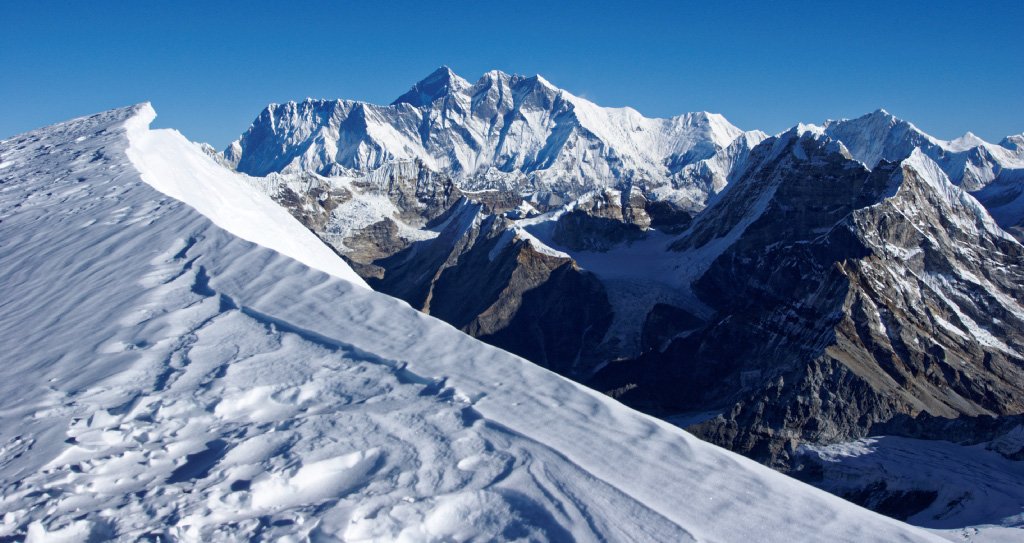
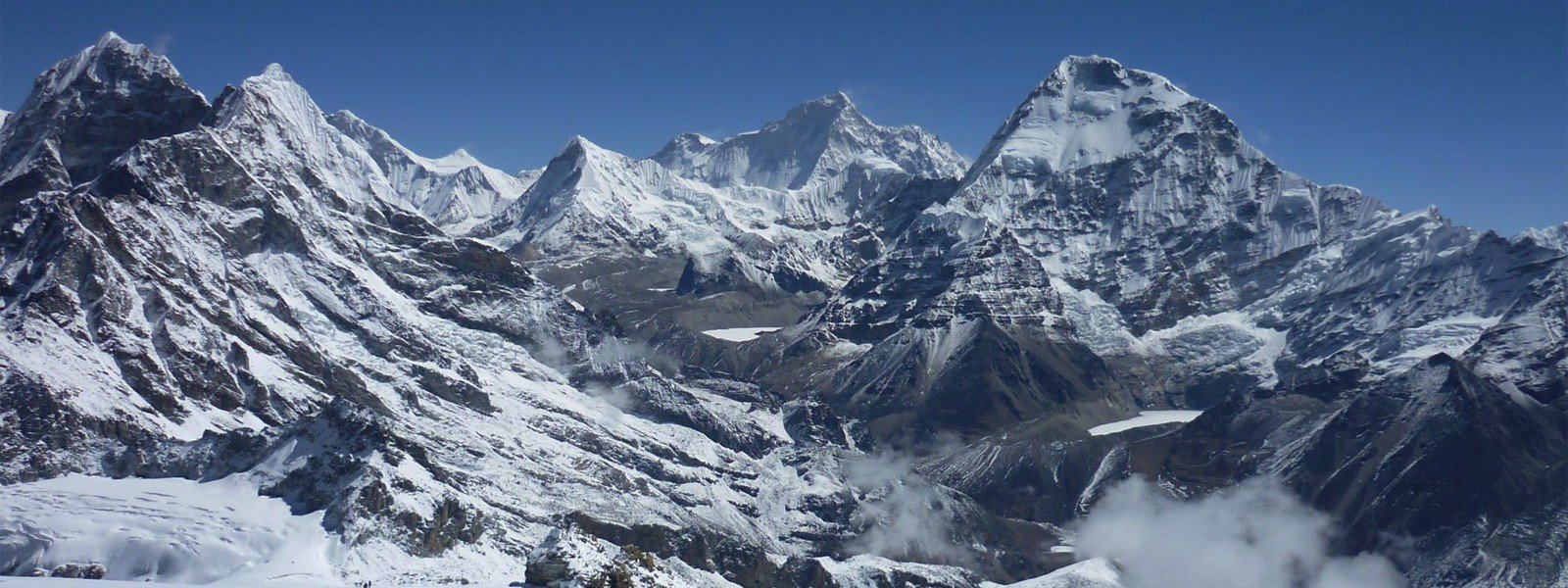
Mera Peak, the highest trekking peak in Nepal, is considered one of the most accessible 6000m+ summits. While technically less complex, the altitude makes it a serious endurance challenge. From its summit, climbers are rewarded with breathtaking panoramic views of Everest, Lhotse, Makalu, Ama Dablam, Kangtega, and other majestic Himalayan giants.
The expedition also includes Island Peak, a popular climbing peak known for its stunning amphitheater setting beneath Imja Glacier, and Lobuche East, which offers a more technical climbing experience with steep sections and exposed ridges.
First successfully summited in 1953 by Sen Tenzing and Jimmy Roberts, Mera Peak remains one of the most iconic trekking peaks in Nepal. The Khumbu 3 Peaks journey is not only about climbing but also about experiencing the rich Sherpa culture, remote mountain villages, and diverse Himalayan landscapes ranging from lush forests to icy alpine terrain.
This expedition is best suited for climbers with good physical fitness and prior trekking or basic mountaineering preparation. It is widely regarded as one of the most complete and unforgettable high-altitude adventures in the Himalayas.
Trip Info
-
Hotel/ Tea house.
-
Autumm/ spring
-
6476M
-
5/6 hours
Overview
Khumbu 3 Peaks Climbing is a demanding Himalayan expedition that combines three iconic summits: Mera Peak (6,476m), Island Peak (Imja Tse, 6,189m), and Lobuche East Peak (6,119m). This journey is designed for adventurous climbers seeking a full high-altitude experience in the Khumbu region, blending trekking, peak climbing, and cultural exploration.
The route involves challenging terrain and high mountain passes such as Cho La Pass (5,420m) and Amphu Lapcha La Pass (5,845m). Along the way, climbers experience dramatic changes in landscape—from lush rhododendron forests and traditional Sherpa villages to rugged glaciers and icy alpine ridges.
Mera Peak, the highest trekking peak in Nepal, stands at 6,476m and is famous for its sweeping panoramic views of Everest, Lhotse, Makalu, Ama Dablam, Kangtega, and other Himalayan giants. Although it is considered technically straightforward, the extreme altitude makes it a serious physical challenge. It is widely regarded as one of the most rewarding high-altitude trekking peaks in the Himalayas.
Island Peak (6,189m) is one of the most popular climbing peaks in the Khumbu region. Often climbed as part of Everest trekking routes, it offers an excellent introduction to snow and ice climbing. The summit provides stunning views of Lhotse’s south face, Nuptse, and surrounding Himalayan peaks, making it a favorite for beginner and intermediate climbers aiming to gain mountaineering experience.
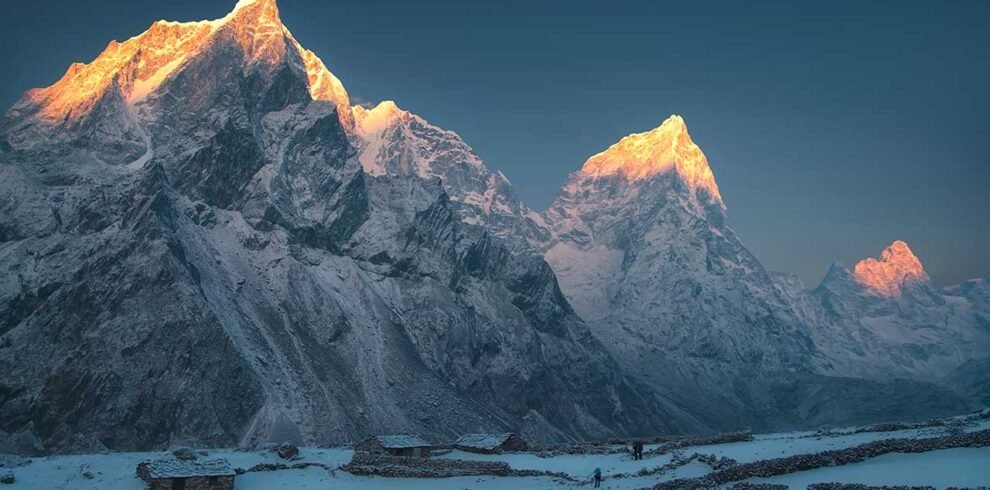
Lobuche East Peak (6,119m) is considered one of the more challenging trekking peaks in the region. The climb includes steep sections and ridge walking, offering a more technical experience compared to Island Peak. From the summit, climbers are rewarded with exceptional views of Everest, Lhotse, Ama Dablam, Cholatse, Tawache, and numerous other peaks in the Khumbu Valley.
Historically, the Lobuche region was used as seasonal grazing land by Himalayan herders, and elements of this traditional lifestyle can still be seen today. The area now attracts climbers from around the world who come to experience both its natural beauty and high-altitude challenge.
Throughout the expedition, climbers stay in a mix of teahouses and camping accommodations depending on the route and conditions. The journey also offers deep cultural immersion into Sherpa traditions, with experienced guides ensuring safety, support, and insight into local mountain heritage.
Khumbu 3 Peaks Climbing is best suited for physically fit trekkers with prior high-altitude experience, offering one of the most complete and rewarding mountaineering adventures in Nepal.
Itinerary
Your adventure begins upon arrival in Kathmandu, the vibrant capital of Nepal. After landing at Tribhuvan International Airport, you will be warmly welcomed and transferred to your hotel for check-in and rest following your journey.
If time permits, you can explore the lively streets of Thamel, a popular tourist hub known for its trekking shops, cafés, restaurants, and cultural atmosphere. It is a great place to experience the energy of Kathmandu and prepare for the days ahead.
In the evening, a detailed briefing will be conducted about the Khumbu 3 Peaks Climbing expedition, including important information about the itinerary, safety guidelines, and preparations for the journey. You will then enjoy a comfortable overnight stay at your hotel, getting ready for the adventure ahead in the Himalayas.
Early in the morning, you take a scenic flight to Lukla, the gateway to the Khumbu region. This short but unforgettable journey provides spectacular aerial views of the Himalayan mountains before landing at Tenzing-Hillary Airport, one of the most famous and dramatic airstrips in the world.
Upon arrival, you meet your trekking crew and begin the first stage of the expedition. The trail gradually ascends through beautiful rhododendron and pine forests, passing small Sherpa settlements along the way. As you move away from Lukla, the atmosphere becomes quieter and the mountain environment more serene.
After several hours of trekking, you reach Chutanga, a peaceful settlement surrounded by hills. This is your first overnight stop on the trail. The hike also serves as an important initial acclimatization step, helping your body begin adjusting to the higher elevations ahead in the Khumbu region.
Today’s trek is both challenging and highly rewarding as you make your way toward Zatrawa La Pass. The trail begins with a steady ascent through alpine forests, gradually transitioning into rugged high-altitude terrain with increasingly dramatic mountain scenery.
As you climb higher, the path becomes steeper with a series of switchbacks leading up to the pass at 4,610m. From the top of Zatrawa La, you are rewarded with breathtaking panoramic views of the Dudh Koshi Valley and surrounding Himalayan peaks, including Karyolung and Numbur Himal.
After spending some time at the pass, you descend along a rocky trail toward Tuli Kharka, a quiet grazing area surrounded by rolling hills and alpine landscapes. This section of the journey is physically demanding but essential for proper acclimatization.
Upon arrival at Tuli Kharka, you settle in for an overnight stay, resting and preparing for the next stage of the expedition deeper into the Khumbu region.
After a restful night at Tuli Kharka, the journey continues with a scenic descent toward Kothe. The trail passes through dense rhododendron and pine forests, offering a refreshing change from the high-altitude landscapes of the previous day.
As you descend, the first clear views of Mera Peak appear in the distance, standing proudly above the surrounding ridgelines. The route follows the contours of the hills with beautiful views of the remote Hinku Valley, one of the most untouched regions in the Himalayas.
Although the overall trek is downhill, certain sections require careful footing over rocky and uneven terrain. Upon reaching Kothe, a small settlement along the banks of the Hinku River, you are welcomed by peaceful surroundings and traditional teahouses.
The lower elevation provides a comfortable environment for rest and recovery, making Kothe an ideal stop to regain strength and continue acclimatization before heading deeper into the Mera Peak region.
Leaving Kothe behind, the trail follows the Hinku River, gradually ascending deeper into the valley. As you progress, the scenery becomes increasingly dramatic, with Mera Peak prominently dominating the skyline.
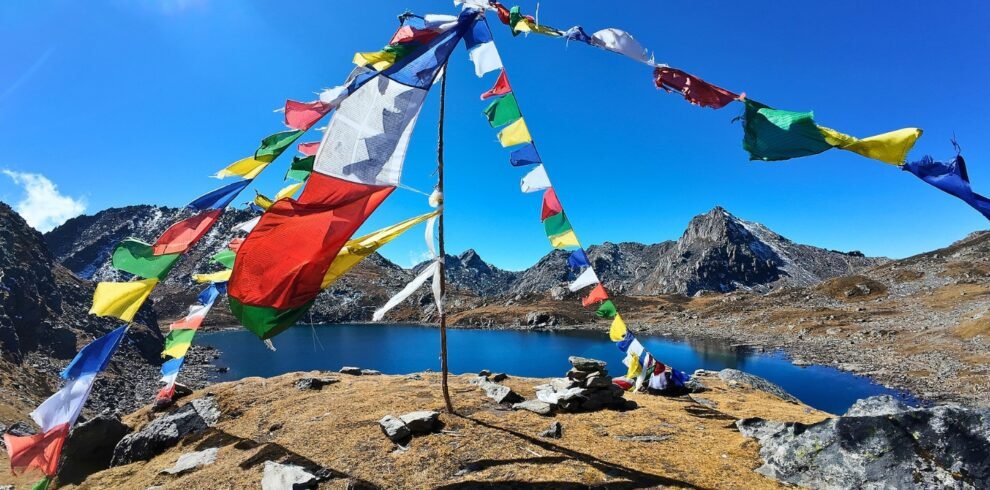
The route transitions from dense forest into alpine terrain, where yak pastures, glacial streams, and rugged landscapes define the surroundings. Along the way, you may pass small settlements and traditional Buddhist sites adorned with prayer flags, reflecting the spiritual heritage of the region.
The ascent is steady and continuous, offering both a physical challenge and rewarding views throughout the journey. By afternoon, you arrive at Thangnak, a small but important acclimatization stop situated beneath towering cliffs and glacial moraines.
Here, you settle in for the night, allowing your body to adjust to the increasing altitude while preparing for the higher sections of the expedition ahead.
Today’s trek takes you to higher altitudes as you ascend from Thangnak to Khare, the final major stop before Mera Peak Base Camp. The trail follows the lateral moraine of the Dig Glacier, offering impressive views of surrounding peaks, ice formations, and rugged Himalayan terrain.
As the ascent continues, the air becomes noticeably thinner and the landscape more austere, with rocky paths, glacial streams, and moraine sections requiring careful and steady movement. The dramatic north face of Mera Peak gradually comes into full view, adding motivation throughout the climb.
After several hours of steady trekking, you reach Khare, a small but important acclimatization settlement located beneath the towering ice walls of Mera Peak. This is a key staging point for the upcoming climb.
The rest of the day is spent resting, hydrating, and preparing for the technical section of the expedition. You also have time to check climbing equipment and familiarize yourself with the conditions ahead, ensuring readiness for the next stage of the journey.
Today is an important acclimatization and preparation day in Khare before moving to higher elevations. Resting at this altitude allows the body to adapt to the thinner air, helping to reduce the risk of altitude-related illness and ensuring better performance for the climb ahead.
Along with rest, you participate in a guided training session led by experienced climbing guides. This includes hands-on practice with essential mountaineering equipment such as ice axes, crampons, harnesses, and fixed ropes on nearby glacial terrain. The session is especially valuable for those with limited technical climbing experience, building confidence and improving safety skills for the upcoming ascent.
The day also provides an opportunity to carefully review and organize climbing gear, making any necessary adjustments before heading toward Mera Peak Base Camp. Surrounded by dramatic views of glaciers and towering Himalayan peaks, Khare offers a motivating and ideal environment to prepare for the challenging journey ahead.
Leaving Khare behind, the ascent continues toward Mera Peak Base Camp, entering increasingly rugged and glaciated terrain. The trail climbs steadily over rocky moraine and uneven slopes before reaching the edge of the Mera Glacier.
At this stage, crampons are fitted to safely cross the icy sections, and the route continues across the glacier along a carefully chosen path toward base camp. As altitude increases, the air becomes thinner and each step more demanding, though the surrounding views of Everest, Makalu, and Cho Oyu provide constant inspiration.
After several hours of steady progress, you arrive at Mera Peak Base Camp, located beneath the impressive face of the mountain. Camp is set up upon arrival, followed by rest and hydration while taking in the vast Himalayan panorama.
This marks an important milestone in the expedition, as the team prepares for the higher camps and the demanding climb ahead.
Leaving Mera Peak Base Camp, the ascent continues toward High Camp (5,790m), marking one of the most demanding sections of the expedition. The trail traverses steep icy slopes and crevassed glacier terrain, requiring careful footing and a steady, controlled pace.
As altitude increases, the air becomes noticeably thinner, making each step more strenuous. Despite the physical challenge, the surrounding Himalayan panorama—including Everest, Lhotse, Makalu, and other towering peaks—provides constant encouragement along the way.
The route gradually becomes steeper, and climbers rely on crampons and ice axes to safely navigate the glaciated path. After several hours of steady ascent, High Camp is reached, offering a dramatic setting high above the valley.
At camp, tents are set up and time is taken to rest, hydrate, and recover while enjoying breathtaking views of snow-covered peaks glowing in the changing light. This stage is crucial for conserving energy and preparing for the final summit push of the expedition.
The most anticipated day of the expedition begins in the early hours before dawn. With headlamps illuminating the route, the final ascent toward the Mera Peak summit (6,476m) gets underway. The climb is slow and steady, with cold alpine air and firm snow underfoot guiding the way upward.
As altitude increases, the first light of day begins to appear on the horizon, gradually revealing a spectacular sunrise over the Himalayas. The final section to the summit is steep and physically demanding, requiring endurance and focus at extreme altitude.
Reaching the summit rewards climbers with an unforgettable 360-degree panorama of some of the world’s highest peaks, including Everest, Lhotse, Makalu, Cho Oyu, and Kanchenjunga in the distance. After spending time at the top, the descent begins carefully, retracing the route back down the glacier.
The team returns to High Camp for a short rest before continuing further down toward Khamedingma (5,400m). The descent involves crossing icy slopes and rocky terrain, demanding continued attention despite the relief of having summited.
The day concludes at Khamedingma, where climbers rest and recover after the long and demanding summit push, reflecting on the achievement of reaching the top of Mera Peak.
After the exhilarating Mera Peak summit, the journey continues into the remote and less-traveled regions of the Himalayas. Leaving Khamedingma, the trail leads through rugged high-altitude terrain surrounded by towering peaks and expansive glacial valleys.
The landscape becomes increasingly wild and isolated, with very few signs of human presence, offering a true sense of wilderness. As the route progresses deeper into the Hinku Valley, the air remains crisp and the path crosses rocky moraines and barren alpine ridges shaped by glaciers.
After several hours of trekking through this dramatic mountain environment, you arrive at Seto Pokhari (“White Lake”), a stunning glacial lake situated beneath towering Himalayan peaks. Its calm, reflective waters create a peaceful and almost surreal atmosphere in the high mountains.
Here, the team sets up camp and settles in for the night, taking time to rest and recover while acclimatizing for the higher and more remote sections of the expedition ahead.
Leaving the serene waters of Seto Pokhari behind, the trail continues deeper into the remote wilderness of the Hinku Valley. The scenery becomes increasingly dramatic, with towering peaks, glacial moraines, and vast barren ridges stretching across the horizon.
This isolated section of the journey offers a true wilderness experience, with very little human presence and a strong sense of remoteness. The ascent is gradual but physically demanding, with rocky paths and occasional icy sections requiring steady and careful movement.
As altitude increases, the air becomes thinner, making a slow and consistent pace essential. Along the way, stunning views of Chamlang, Baruntse, and other Himalayan giants rise above the valley, adding inspiration to the challenging trek.
By late afternoon, you arrive at Amphu Lapcha High Camp, an important staging point before crossing the technical Amphu Lapcha Pass. Camp is set in a remote alpine setting, where time is spent resting and preparing for the demanding climb ahead.
As the sun sets over the surrounding peaks, the atmosphere becomes calm and strikingly beautiful, marking another memorable stage of the expedition.
The day begins early as preparation starts for one of the most technical and demanding sections of the expedition—the crossing of Amphu Lapcha Pass. The ascent involves steep climbing over a mix of icy slopes and rocky terrain, where fixed ropes, crampons, and ice axes are essential for safety and progress.
As the route continues across the glacier toward the pass, the increasing altitude makes movement slower and more challenging. Despite the effort, the surrounding views of Everest, Lhotse, and Baruntse provide constant motivation throughout the climb.
The final section includes a steep and exposed icy climb, leading to the top of Amphu Lapcha Pass, one of the most dramatic high passes in the region. From the summit, the descent begins with equally technical sections, requiring careful use of ropes while navigating steep, frozen terrain.
Gradually, the environment changes as the glacial landscape gives way to rocky ridges and alpine terrain. After several hours of controlled descent, you arrive at Chukhung in the Imja Valley.
Here, the team rests and recovers after the demanding crossing, surrounded by towering Himalayan peaks and the vast, rugged beauty of the Khumbu region.
After a well-deserved rest in Chukhung, the journey continues toward Island Peak Base Camp. The trail gradually ascends through the stunning Imja Valley, surrounded by towering Himalayan peaks such as Lhotse, Nuptse, and Ama Dablam.
As the trek progresses, the terrain transitions from grassy alpine meadows to rocky moraines, with glacial streams flowing through the valley. The air becomes noticeably thinner, making a steady and controlled pace important for continued acclimatization.
Nearing Base Camp, the landscape turns increasingly rugged, with the massive ice walls of Island Peak dominating the horizon. Upon arrival, camp is established close to the glacier, offering dramatic views of the surrounding peaks.
The remainder of the day is dedicated to preparation for the summit attempt, including gear checks and basic climbing practice. As night approaches, anticipation builds for the climb ahead, marking an exciting stage of the Island Peak expedition.
Summit day begins in the early hours before sunrise as the ascent from Island Peak Base Camp starts under headlamp light. The initial section follows a steep, rocky trail that gradually leads onto glacial terrain, where climbers put on crampons, harnesses, and fixed ropes for safety.
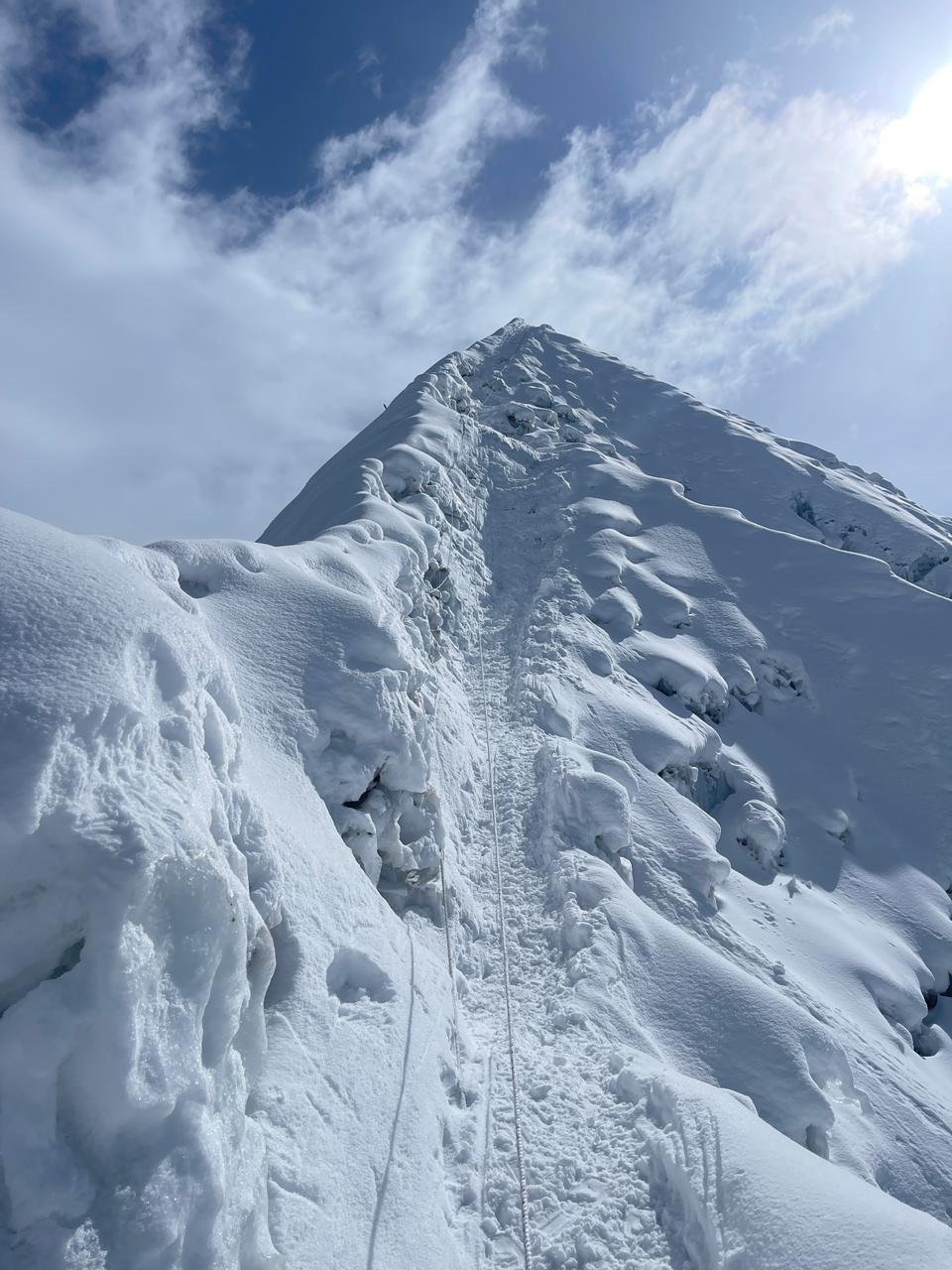
As the climb progresses, the route becomes more demanding, crossing crevasses and steep ice slopes that require careful movement and endurance. The final section involves a challenging ascent on a fixed rope leading toward the narrow summit ridge.
Reaching the summit of Island Peak is a memorable achievement, offering spectacular panoramic views of the surrounding Himalayas, including Mount Everest, Lhotse, Makalu, and Ama Dablam.
After spending time at the summit to take in the scenery and capture the moment, the descent begins carefully, retracing the route back down the glacier to Base Camp. From there, a short rest is taken before continuing the trek back toward Chukhung, where the successful summit is celebrated and the body is allowed to recover after the demanding climb.
After the successful Island Peak summit, the descent continues from Chukhung toward the lower regions of the Khumbu Valley. The trail follows a scenic route along the Imja River, offering wide-open views of Ama Dablam, Lhotse, and the surrounding Himalayan peaks.
As the path winds through alpine meadows and yak grazing pastures, the increasing oxygen levels make the walk more comfortable after days spent at high altitude. The landscape feels greener and more welcoming as elevation gradually decreases.
You arrive at Dingboche, a beautiful Sherpa village known for its stone-walled fields and dramatic mountain setting. Often referred to as the “Summer Valley” of the Khumbu, it provides a peaceful environment for rest and recovery.
Here, time is spent relaxing in traditional teahouses, enjoying warm meals, and taking in the surrounding scenery. It is also a moment to reflect on the remarkable journey through the high Himalayas before continuing the descent.
The trek from Dingboche begins with a gradual ascent along a rugged trail that winds through high-altitude terrain, offering stunning views of Taboche, Cholatse, and Ama Dablam.
As the elevation increases, the landscape becomes increasingly barren, with grassy meadows giving way to rocky paths and glacial moraines. The thinning air makes the journey more demanding, requiring a steady pace and continued acclimatization.
The route continues toward Thukla Pass, a significant point marked by memorials dedicated to climbers who lost their lives in the Himalayas. After a brief pause for reflection, the trail climbs steeply but steadily toward the settlement of Lobuche.
Situated beneath the dramatic backdrop of the Khumbu Glacier, Lobuche serves as an important high-altitude stop, offering rest and preparation before the final approach toward Everest region destinations.
The trek from Lobuche begins with a steep ascent into the high-altitude landscapes of the region. The trail crosses rocky moraines and glacial terrain, requiring careful movement as the elevation steadily increases.
As the air becomes thinner, the pace remains slow and controlled to support proper acclimatization. The route gradually leaves the main Everest Base Camp trail behind, heading toward the more isolated and rugged slopes associated with Lobuche Peak.
Along the way, impressive views open up of Nuptse, Ama Dablam, Pumori, and other surrounding Himalayan peaks. After several hours of ascent, Lobuche High Camp is reached, set in a remote alpine environment with dramatic mountain scenery.
Upon arrival, tents are established and the rest of the afternoon is dedicated to rest, hydration, and preparation for the upcoming summit attempt. The surrounding wilderness provides a striking backdrop as the team prepares for the final stage of the climb.
The climb from High Camp begins in the early hours before sunrise, with headlamps guiding the way as the route ascends the steep, icy slopes of Lobuche East Peak. The terrain combines rocky sections and glaciated paths, requiring the use of ropes, crampons, and ice axes for safe progress.
As altitude increases, the air becomes thinner and each step more demanding, though the surrounding Himalayan views—including Mount Everest, Lhotse, Nuptse, and Ama Dablam—provide constant motivation.
Reaching the summit is a remarkable achievement, offering a wide panoramic view of the surrounding Himalayan range in every direction. After spending time at the top, the descent begins carefully back to High Camp for rest and recovery.
The journey continues further down through rocky ridges and alpine valleys until reaching Pheriche, a peaceful Sherpa village. Here, the team finally relaxes in comfortable teahouses, reflecting on the successful ascent of Lobuche East Peak and the challenges overcome along the way.
Leaving Pheriche, the trail gradually descends through alpine landscapes, with the crisp mountain air becoming warmer as the elevation decreases. The route follows sections of the Imja and Dudh Koshi river valleys, crossing suspension bridges and passing through traditional Sherpa villages decorated with prayer flags and mani walls.
Throughout the journey, impressive views of Ama Dablam, Thamserku, and Kangtega remain visible, adding beauty to the descent. Although there are occasional uphill sections, the increasing oxygen levels make the trekking more comfortable and steady.
Approaching Namche Bazaar, the lively atmosphere of this well-known mountain town provides a refreshing contrast to the remote high-altitude regions. With its bakeries, lodges, and bustling markets, Namche is an ideal place to relax, enjoy a warm meal, and reflect on the achievements of the expedition before continuing toward the final descent to Lukla.
The descent from Namche Bazaar begins along a steep downhill trail that winds through pine forests and crosses several suspension bridges over the Dudh Koshi River. As elevation decreases, the air becomes warmer and the landscape gradually shifts into lush greenery, offering a refreshing contrast to the high-altitude terrain of previous days.
The route passes through familiar Sherpa settlements such as Monjo and Phakding, following the well-established Everest trekking trail. Along the way, the final views of surrounding Himalayan peaks accompany the journey back toward lower elevations.
The last section toward Lukla includes a steady walk with a few short uphill sections before reaching the town. Arrival in Lukla marks the completion of an unforgettable high-altitude expedition, filled with both challenge and achievement.
Here, time is taken to rest and reflect on the journey, celebrating the successful completion of the three peaks expedition before the return flight to Kathmandu the following day.
After an unforgettable Himalayan adventure, an early morning flight takes you from Lukla back to Kathmandu. This short yet scenic journey offers a final aerial view of the towering peaks and deep valleys explored during the expedition.
Upon arrival in Kathmandu, you are transferred to your hotel for check-in and a well-deserved rest. The remainder of the day is free to relax, explore the lively streets of Thamel, or enjoy a celebratory meal.
Whether spending time at a café, shopping for souvenirs, or simply reflecting on the journey, this final evening in Nepal provides a fitting conclusion to the Khumbu 3 Peaks Climbing expedition.
After an incredible journey through the Himalayas, it is time to bid farewell to Nepal. Depending on your flight schedule, you may have some free time in Kathmandu to explore the city, shop for souvenirs, or simply relax before departure.
A transfer will be arranged to Tribhuvan International Airport for your onward flight. As you leave Nepal, you carry with you unforgettable memories of the Khumbu 3 Peaks Climbing expedition, spectacular mountain landscapes, and the warm hospitality experienced throughout the journey.
This marks the conclusion of an extraordinary adventure in the Himalayas, leaving behind lasting impressions and inspiring experiences from the high mountains of Nepal. Safe travels.
Includes/Excludes
Cost Includes
- Roundtrip flights: Kathmandu–Lukla–Kathmandu
- All international and domestic airport transfers, pick-up and drop service
- 2 nights hotel accommodation in Kathmandu (twin/double sharing with breakfast)
- Accommodation during trek in the best available mountain lodges (tea houses)
- Tented accommodation at base camp and high camp
- Full board meals (breakfast, lunch, dinner with tea/coffee) during trek and climbing period
- Mera Peak, Island Peak, and Lobuche East climbing permits with necessary paperwork
- All required trekking permits (National Park entry, permit fees, and TIMS)
- Garbage disposal fees and environmental management charges
- Experienced climbing Sherpa guide and porter service for personal baggage up to base camp and return
- Professional base camp team including cook and support staff
- Insurance, wages, and allowances for climbing Sherpa and support crew
- Fully equipped base camp facilities including kitchen, dining, toilet, storage, and sleeping tents
- Technical climbing training at base camp for participants
- Shared expedition equipment such as ropes, ice screws, snow bars, and safety gear
- Expedition duffle bag provided for each participant
- Welcome dinner in Kathmandu
- Certificate of achievement upon successful completion of the expedition
- Emergency support equipment including portable altitude chamber (PAC) and gamma bag
- Oxygen cylinders available for emergency use
- Comprehensive first aid medical kit provided throughout the expedition
Cost Excludes
- International airfare and Nepal visa fee
- Personal travel, medical, and rescue insurance
- Personal trekking and climbing equipment and gear
- Internet, alcoholic beverages, and bottled mineral water
- Hot showers and other personal service charges during the trek
- Additional hotel accommodation due to early arrival or late departure
- Tips for climbing Sherpas, guides, and porters
FAQs
Khumbu 3 Peaks Climbing is a challenging high-altitude expedition that combines trekking and mountaineering. It involves summiting Mera Peak, Island Peak, and Lobuche East Peak, along with crossing high passes and glacier terrain. Good physical fitness and prior trekking or basic climbing experience are highly recommended.
The best seasons for Khumbu 3 Peaks Climbing are spring (March to May) and autumn (September to November). These months offer stable weather, clearer skies, and safer climbing conditions for high-altitude expeditions in the Everest region.
Prior technical climbing experience is not mandatory, but it is highly beneficial. Participants receive basic mountaineering training during the expedition, including the use of crampons, ropes, and ice axes. However, strong physical fitness and mental endurance are essential for all three peaks.