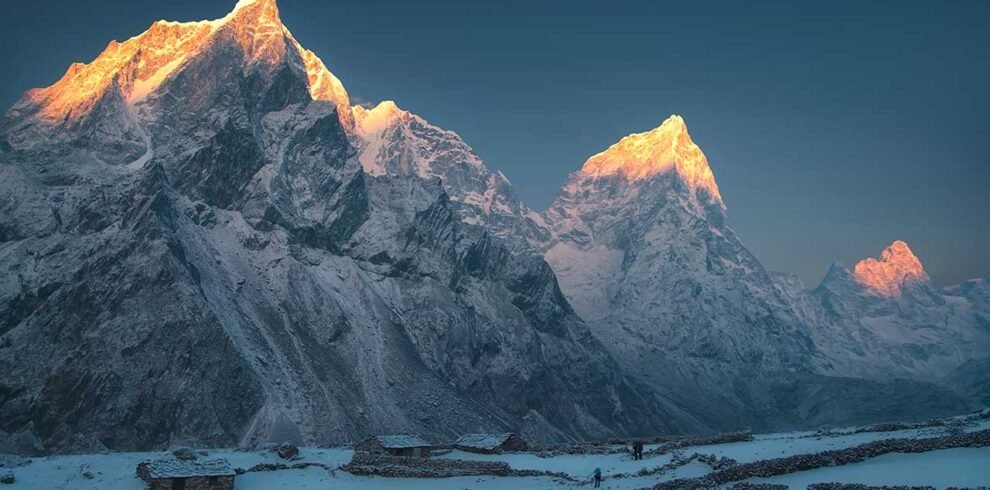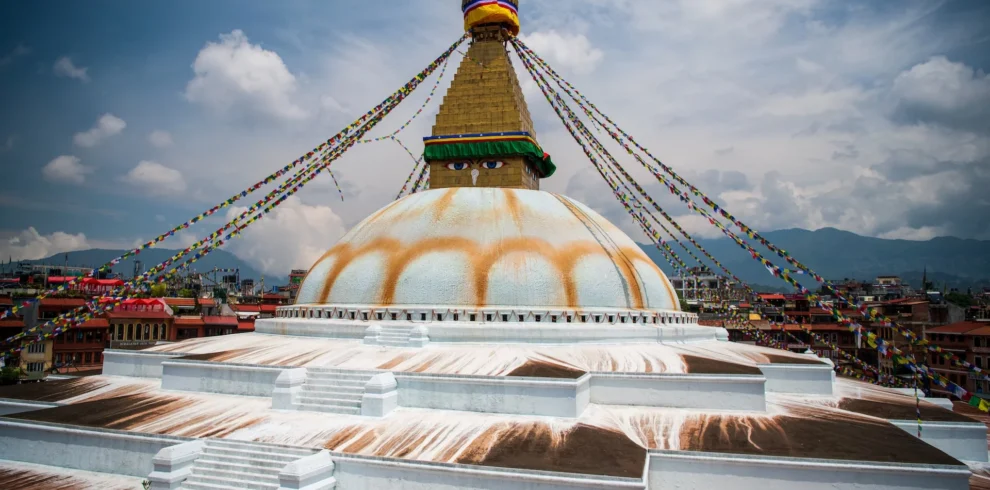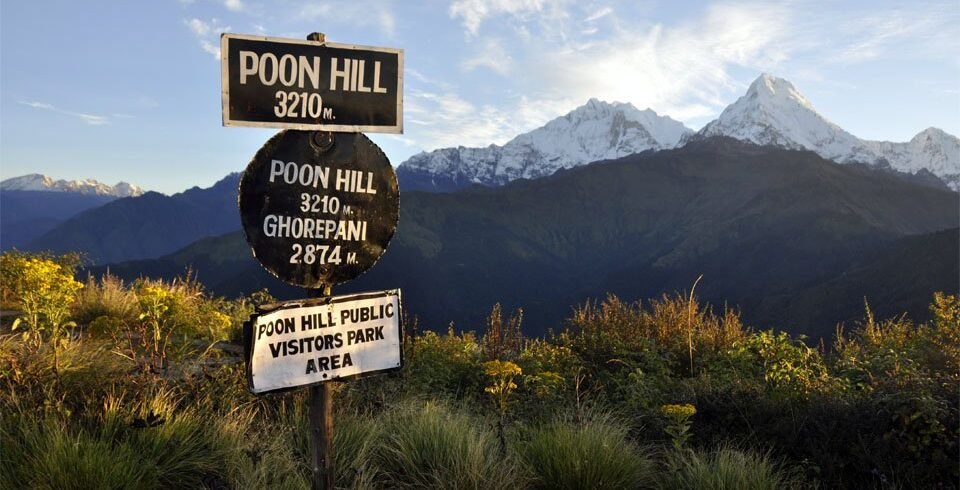
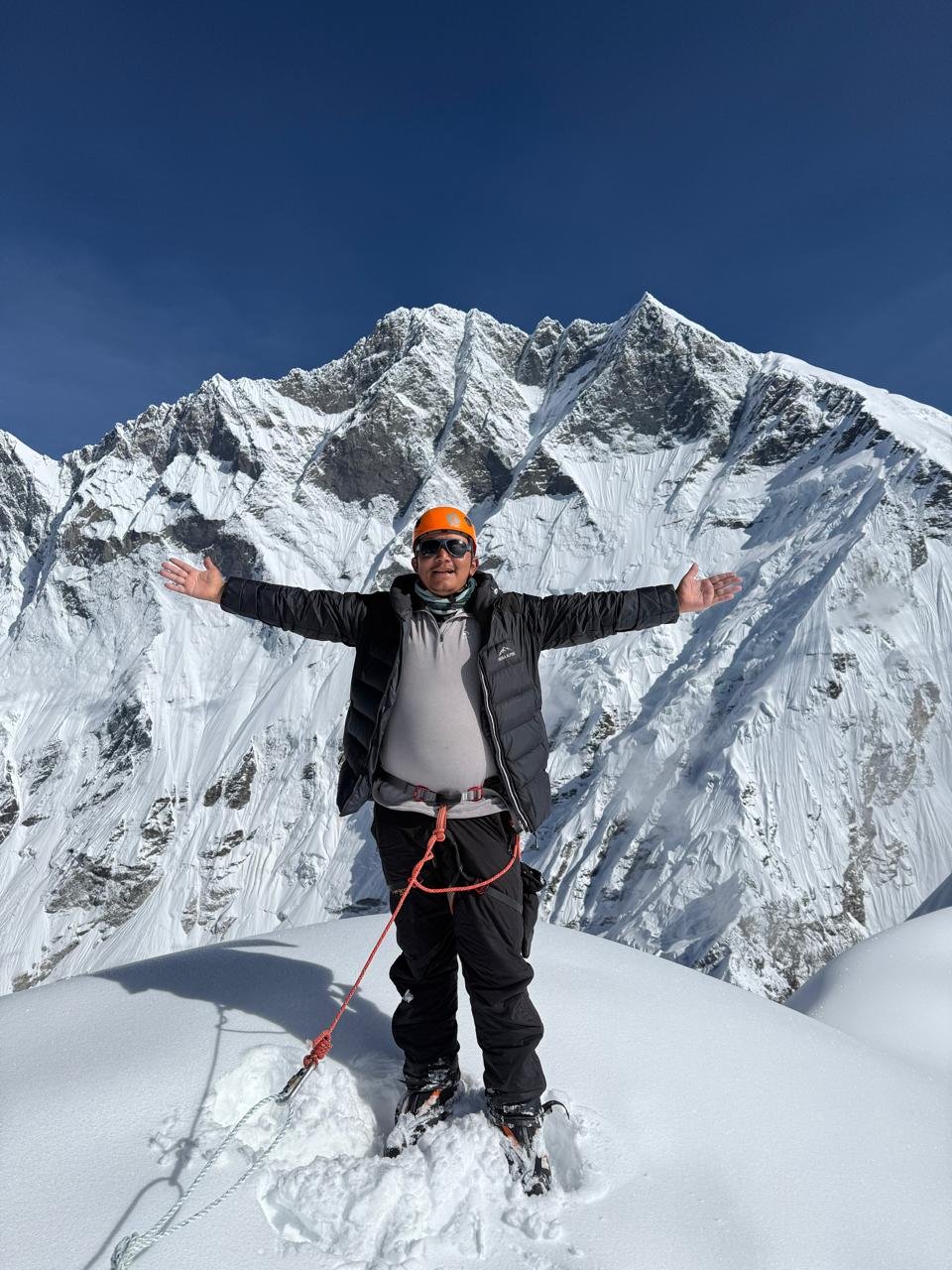
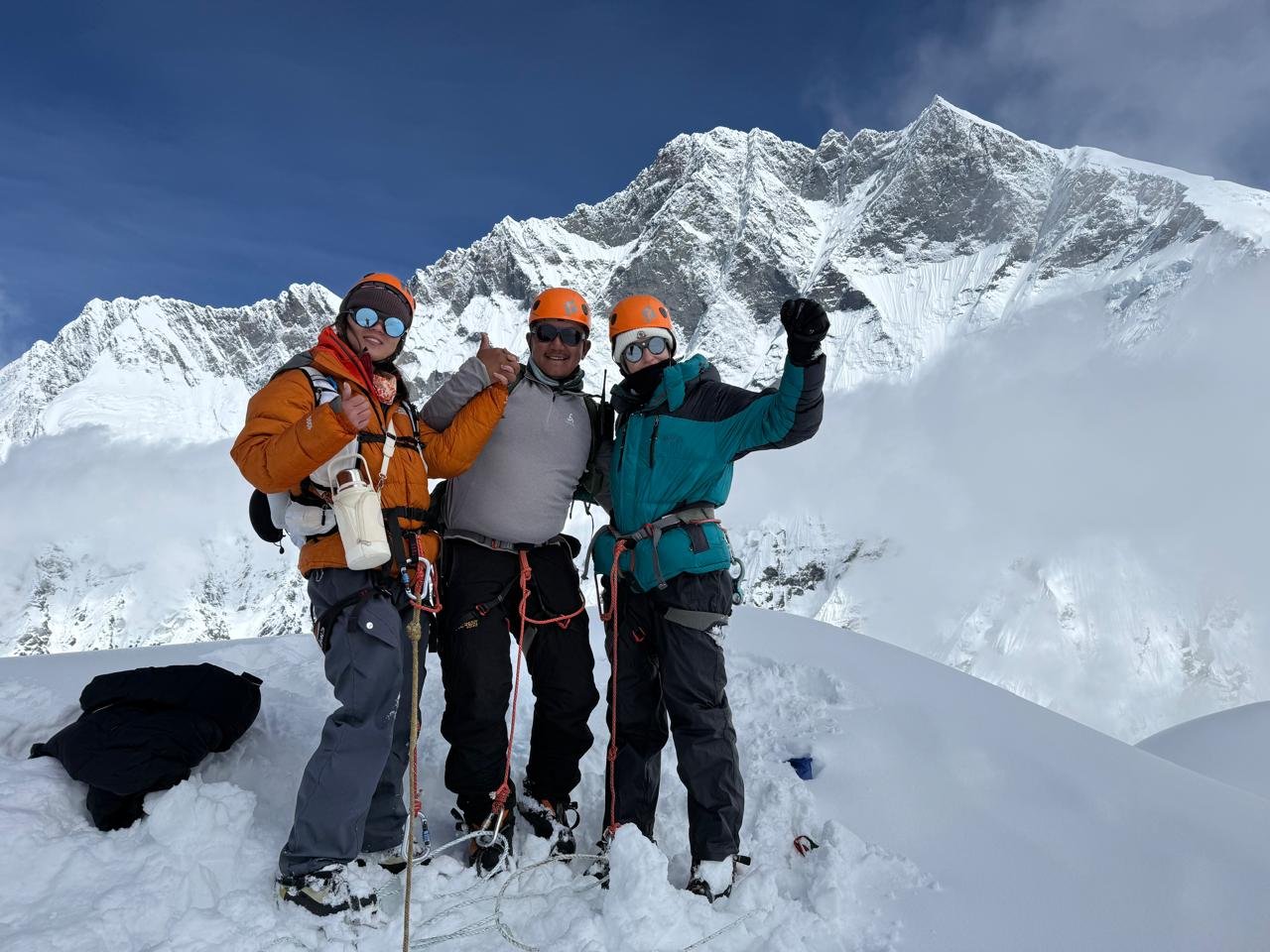
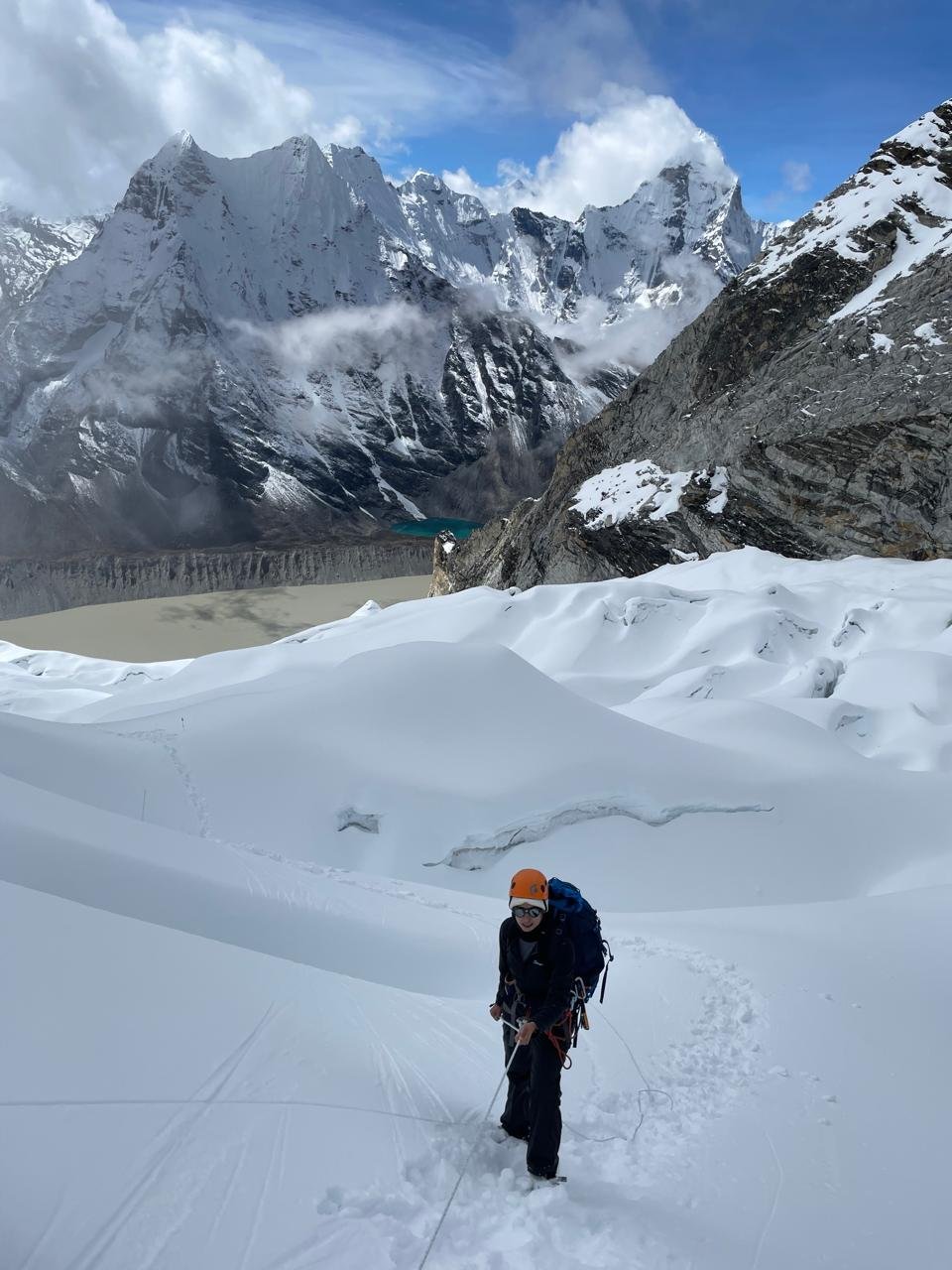
Island Peak Climbing is an exciting Himalayan adventure that leads you through some of the most exotic high passes in the world, including Renjo La Pass (5,338m), Cho La Pass (5,420m), and the famous viewpoint of Kala Patthar (5,545m). Along the journey, you’ll experience the rich traditions, warm hospitality, and spiritual lifestyle of the legendary Sherpa community in the Everest region.
Island Peak, also known as Imja Tse, is one of Nepal’s most popular trekking peaks, ideal for aspiring mountaineers. Although physically demanding, it is considered non-technical, making it a perfect choice for trekkers who want to gain real climbing experience and build confidence for future mountaineering expeditions in the Himalayas and beyond.
This thrilling climb offers breathtaking views of Mount Everest, Lhotse, Makalu, and Ama Dablam, along with an unforgettable sense of achievement. If you are searching for a beginner-friendly Nepal peak climbing adventure, Island Peak is an excellent option for a safe, rewarding, and life-changing experience in the heart of the Everest region.
Trip Info
-
Hotel/ Camping
-
Autumn/ spring
-
6164m
-
Fly/ Car/ Jeep/ Bus
-
5/6 hours
Overview
Island Peak Climbing is one of the most popular and rewarding climbing adventures in Nepal, perfect for energetic and physically fit trekkers who are eager to experience true Himalayan mountaineering. This thrilling journey is ideal for those seeking a beginner-friendly peak climbing experience in the Everest region.
Island Peak, standing at 6,189 meters above sea level, is locally known as Imja Tse. The mountain was named Island Peak in 1951 by British mountaineer Eric Shipton, who noticed that the peak appeared like an island rising from a sea of ice. The name perfectly reflects its stunning location—surrounded by massive glaciers and towering 7,000m and 8,000m Himalayan giants.
With breathtaking views of Lhotse, Makalu, Ama Dablam, and other iconic peaks, Island Peak offers an unforgettable climbing experience and serves as a great introduction for adventurers planning future expeditions in the Himalayas.
Trip Highlights
- The Island Peak Summit at 6189 meters and the views from the peak.
- Mount Makalu (8,475m), Baruntse (7,129m), Ama Dablam (6,812m) and many other Himalayan peaks.
- The peak was named Island Peak in 1951 by Eric Shipton.
- Amazing views of Everest, Lhotse, Nuptse, Changtse, Pumori, Ama Dablam, Chumbu, Thamserku, Kangtega, Taboche & Lobuche from Kalapatthar.
- Offers splendid views of gigantic mountains such as Mount Nuptse (7,879m), Mount Lhotse (8,501m), and Lhotse Middle (8,410m). Lhotse Shar (8,383m),
- Magnificent vistas of Khumbu Icefalls & Glaciers .
- Discover the unique flora and wildlife on the trail inside the Sagarmatha National Park.
- The biggest monastery in the Everest Region, Tengboche Monastery at Tengboche.
Itinerary
Upon your arrival at Tribhuvan International Airport, Kathmandu, our team will warmly welcome you and transfer you to your hotel. After check-in, you can rest and recover from your flight or take a short walk around Thamel, the vibrant tourist hub of Kathmandu. In the evening, you will meet your trekking/climbing guide for a brief orientation about the Island Peak climbing program, essential preparations, and equipment checking. Overnight stay at a hotel in Kathmandu.
Early in the morning, you will take a scenic mountain flight from Kathmandu to Lukla, one of the world’s most adventurous airstrips. The flight offers breathtaking views of the Himalayan range, including Everest and surrounding peaks. Upon landing in Lukla, you will meet the rest of the trekking crew and begin your first day of trekking.
The trail follows the Dudh Koshi River, passing through charming Sherpa villages, prayer wheels, and mani walls before reaching Phakding (2,660m). Today’s hike is relatively easy and helps with gradual acclimatization. After reaching Phakding, you can relax by the riverside or explore the village. Overnight stay at a teahouse in Phakding.
After breakfast in Phakding, you begin your trek toward the famous Sherpa capital, Namche Bazaar. The trail continues along the Dudh Koshi River, crossing several suspension bridges, including the iconic Hillary Suspension Bridge. As you hike through lush pine and rhododendron forests, you will pass charming villages such as Monjo, the entrance to Sagarmatha National Park.
Following a steady ascent and a rewarding final climb, you will reach Namche Bazaar (3,440m)—the main trading and cultural center of the Everest region. On clear days, this section of the trail offers your first glimpse of Mount Everest, along with Lhotse, Thamserku, and Kusum Kanguru. After arriving, you can explore the vibrant market, local shops, cafés, and bakeries. Overnight stay at a teahouse in Namche Bazaar.
Today is a very important day to help your body adjust to the increasing altitude and ensure a safe and successful Island Peak climbing experience. Instead of staying idle, you will enjoy a short acclimatization hike to higher viewpoints around Namche.
A popular option is hiking up to the Everest View Hotel (3,880m), one of the world’s highest luxury hotels, which offers stunning panoramic views of Mount Everest, Lhotse, Ama Dablam, and Thamserku. You may also visit the Sagarmatha National Park Museum and the Sherpa Culture Museum to learn more about the region’s mountaineering history and Sherpa traditions.
After returning to Namche Bazaar, you can enjoy the lively atmosphere of this Himalayan town—visit cafés, bakeries, local shops, or rest in your teahouse. This rest day greatly supports proper acclimatization for the high-altitude trekking and climbing ahead. Overnight stay in Namche Bazaar.
After breakfast, you leave Namche Bazaar and follow a scenic trail that offers magnificent views of Mount Everest, Ama Dablam, Lhotse, and Thamserku. The route gradually descends to Phunki Tenga, where you will cross a suspension bridge over the Dudh Koshi River. From here, a steady uphill climb through beautiful pine and rhododendron forests leads you to the spiritual center of the Everest region—Tengboche.
Tengboche is home to the famous Tengboche Monastery, the largest and most important Buddhist monastery in the Khumbu region. If time permits, you may attend the evening prayer ceremony (puja) and experience the peaceful Buddhist atmosphere with chanting monks.
This location provides one of the best panoramic viewpoints of Ama Dablam, often regarded as one of the most beautiful mountains in the world. Overnight stay at a teahouse in Tengboche.
The trek from Tengboche to Dingboche begins with a gentle descent to Debuche, followed by a scenic trail along the Imja Khola. After crossing a suspension bridge, you climb steadily through Pangboche and Shomare. The landscape opens into a wide valley as you continue toward Dingboche, a beautiful high-altitude village known for its stunning views and perfect acclimatization stop.
Today is your acclimatization day in Dingboche. You take a steady hike to Nangkartsang (Nagarjun) Peak, a popular viewpoint above the village. The climb offers impressive views of Ama Dablam, Makalu, Lhotse, and the Imja Valley. After reaching the viewpoint and enjoying the scenery, you return to Dingboche for rest and preparation for the next day’s trek.
The trek from Dingboche to Lobuche begins with a gradual climb toward Thukla, offering wide views of Taboche and Cholatse. From Thukla, you ascend a steep trail to the Thukla Pass, where memorials honor climbers who lost their lives in the Himalayas. After the pass, the trail becomes gentler as you follow the valley alongside the Khumbu Glacier.
The trail from Lobuche to Gorak Shep follows a rocky path alongside the Khumbu Glacier. You trek through glacial moraine, enjoying close-up views of Nuptse, Pumori, and the surrounding peaks. The walk is gradual but challenging due to the altitude. After a steady climb, you reach Gorak Shep, the last settlement before Everest Base Camp and the starting point for the Kala Patthar hike.
After an early breakfast in Gorak Shep, you begin your trek back toward Dingboche. The descent is gradual but can feel long due to the altitude, so it’s important to pace yourself and stay hydrated. The trail retraces the path along the Khumbu Glacier, passing by moraine-covered terrain and small streams.
You pass through Lobuche, where you can take a short rest and enjoy views of the surrounding peaks, including Pumori, Lingtren, and Nuptse. The trail then continues downhill through open valleys and scattered alpine meadows. You will notice a change in vegetation as you descend, with more shrubs and occasional clusters of pine and rhododendron trees.
Finally, you reach Dingboche, a beautiful high-altitude village famous for its stone-walled fields and panoramic views of Ama Dablam, Lhotse, and Island Peak. This is an ideal place to rest and recover after the long day, and it also serves as an acclimatization stop for trekkers heading to higher altitudes.
After breakfast in Dingboche, you start your trek toward Chhukung, a small village nestled in the Imja Khola Valley. The trail begins with a gentle climb through stone-walled fields and grazing pastures, offering clear views of Ama Dablam, Lhotse, and Island Peak.
As you leave Dingboche, the path gradually ascends along the valley, passing by small streams and mani walls. You’ll walk through alpine terrain dotted with sparse vegetation, and the trail occasionally winds through rocky sections that require careful footing.
Midway, you reach the settlement of Dingboche Yatra and continue toward Chhukung, a scenic village with lodges and teahouses that serve as the base for Island Peak (Imja Tse) climbing and acclimatization hikes. On arrival, you can explore the village, enjoy panoramic mountain views, and rest to prepare for higher-altitude trekking in the following days.
Chhukung is known for its calm environment and stunning backdrop of Imja Tse, making it an ideal spot to acclimatize and take photos of the surrounding peaks.
After breakfast in Chhukung, you begin the trek toward Island Peak Base Camp (Imja Tse Base Camp). The trail starts with a gradual ascent along the Imja Khola Valley, passing through rocky terrain, glacial moraine, and scattered boulders. You will enjoy panoramic views of Island Peak, Ama Dablam, Lhotse, and the surrounding Himalayan peaks as you walk.
The trek takes approximately 3–5 hours depending on your pace and acclimatization needs. Upon reaching the Base Camp, you and your climbing team will conduct pre-climb training, which includes:
- Orientation on safety protocols and glacier navigation
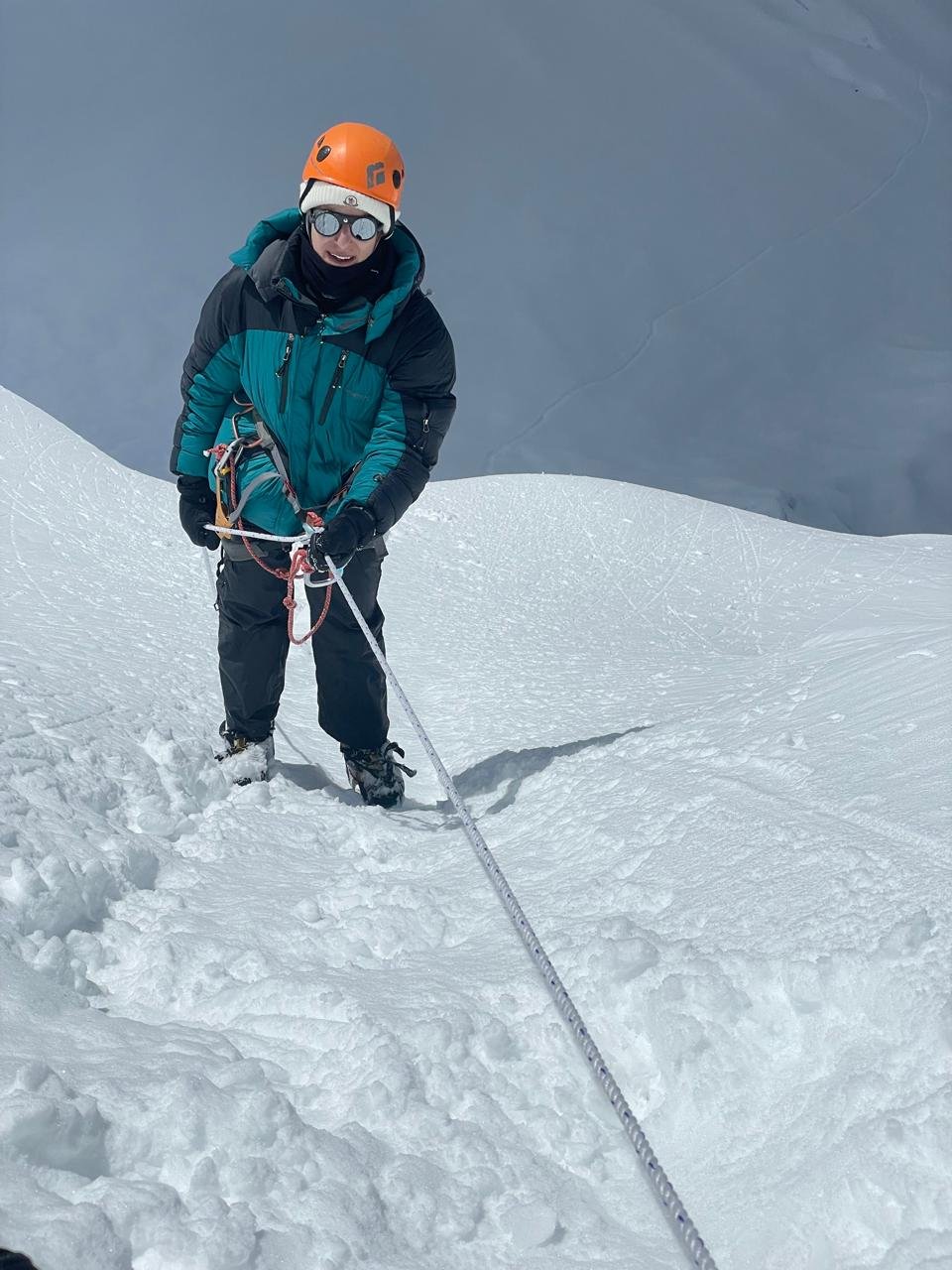
- Basic ice axe and crampon techniques
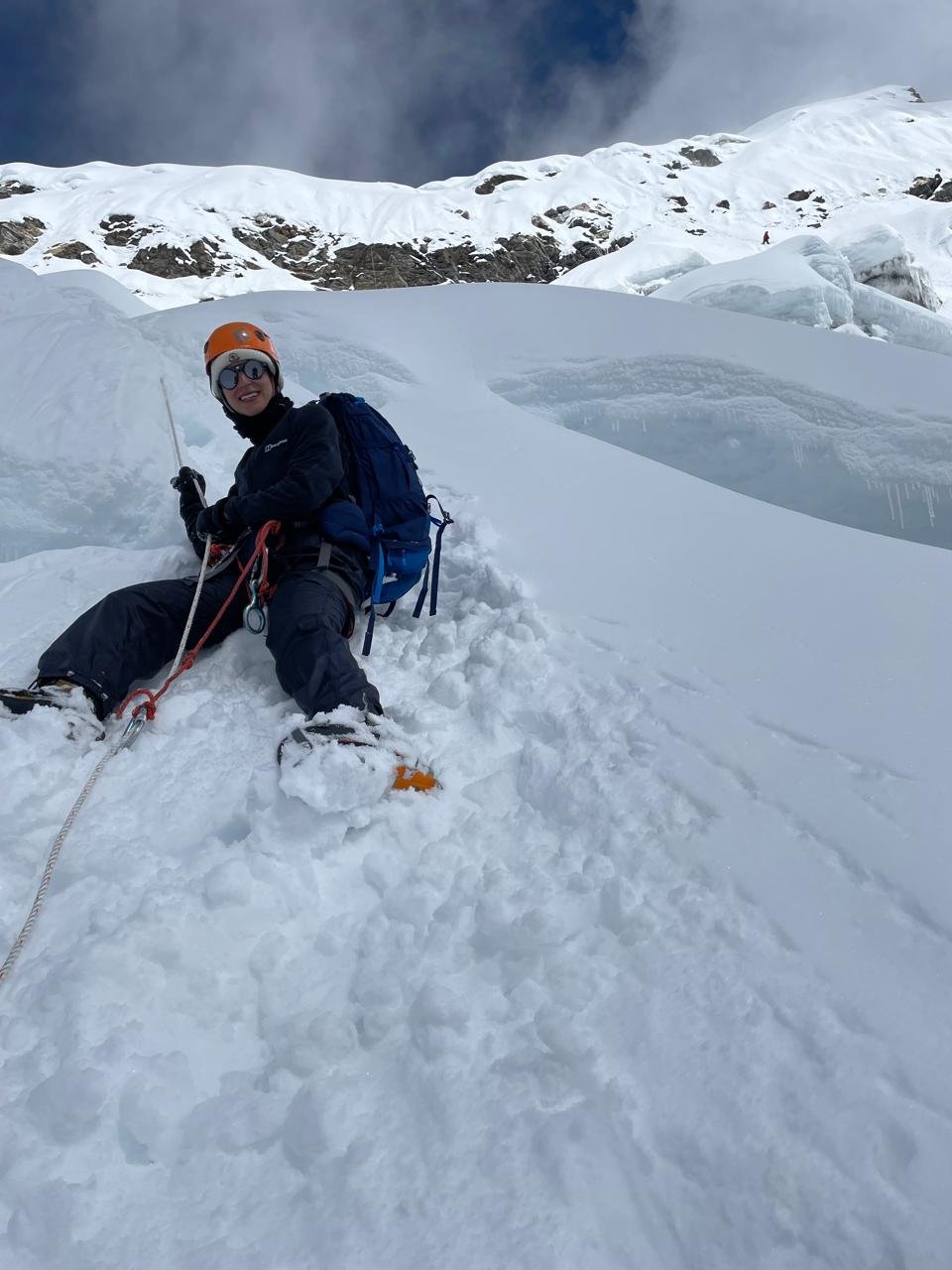
- Rope management and crevasse crossing practice
- Understanding high-altitude climbing risks
This training ensures that everyone is fully prepared for the Island Peak summit attempt. After completing the practice session, you return to Chhukung for rest, hydration, and overnight stay, allowing your body to acclimatize further for the climb ahead.
Today is the most important and exciting day of your entire expedition. The summit push begins very early, usually between 12:00 AM – 2:00 AM, to take advantage of stable weather and reach the top before the afternoon winds.
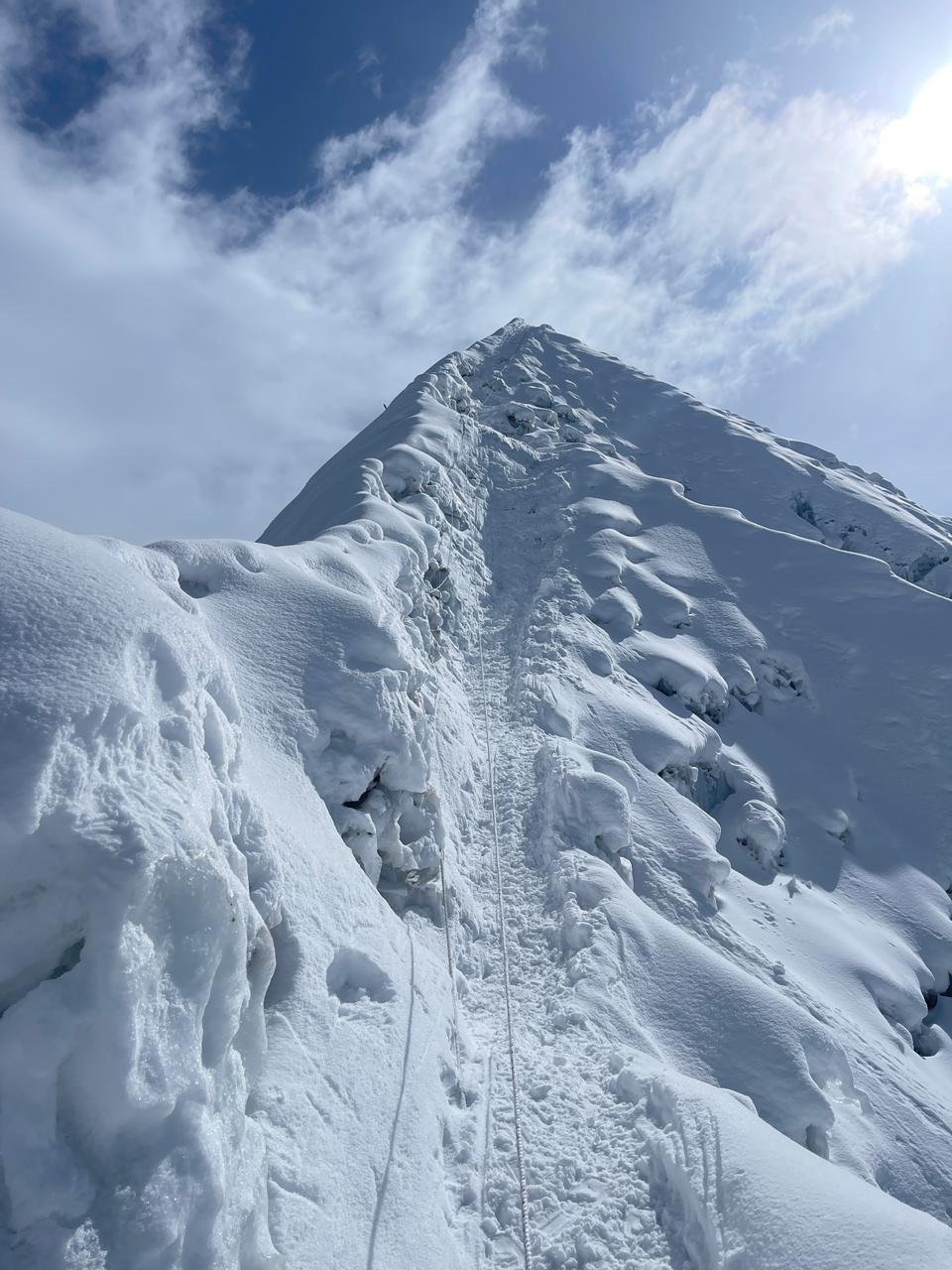
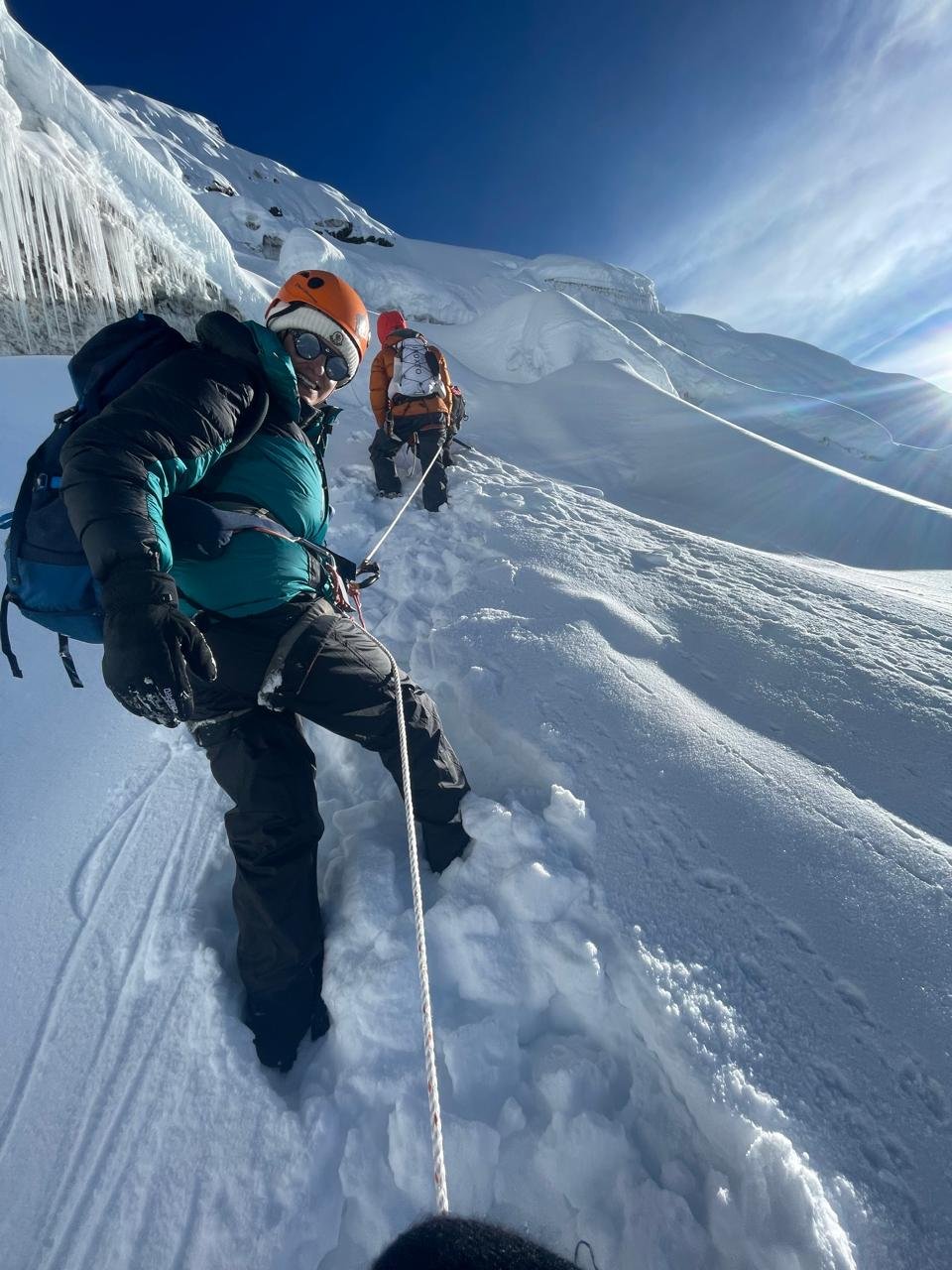
The ascent starts with a steep trail over rocky slopes, gradually leading to the glacier section. Using your climbing gear—crampons, ice axe, harness, and fixed ropes—you will make your way across crevasses and up the summit headwall. This section can be steep and physically demanding, but your experienced climbing guide will support you throughout the climb.
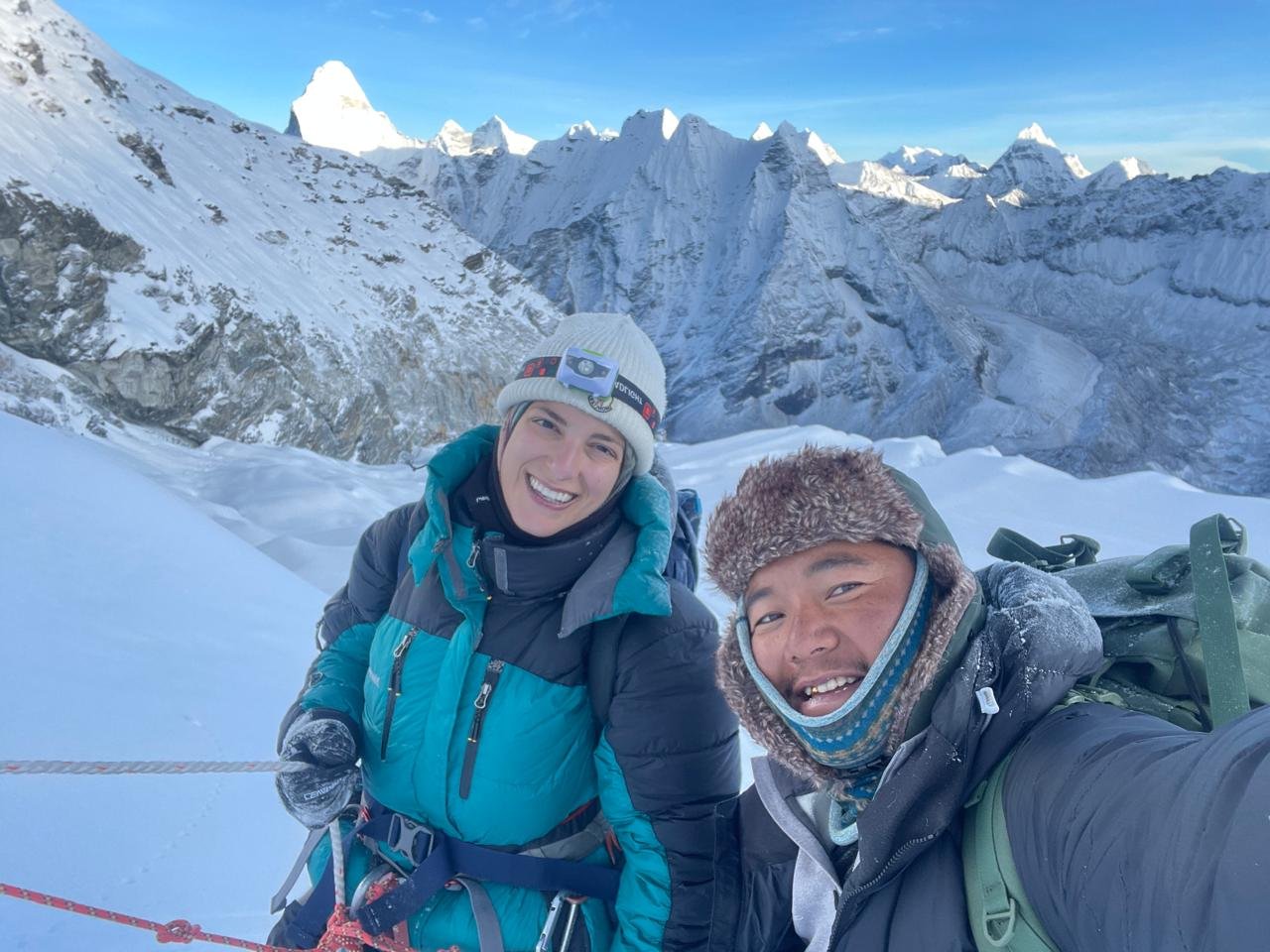
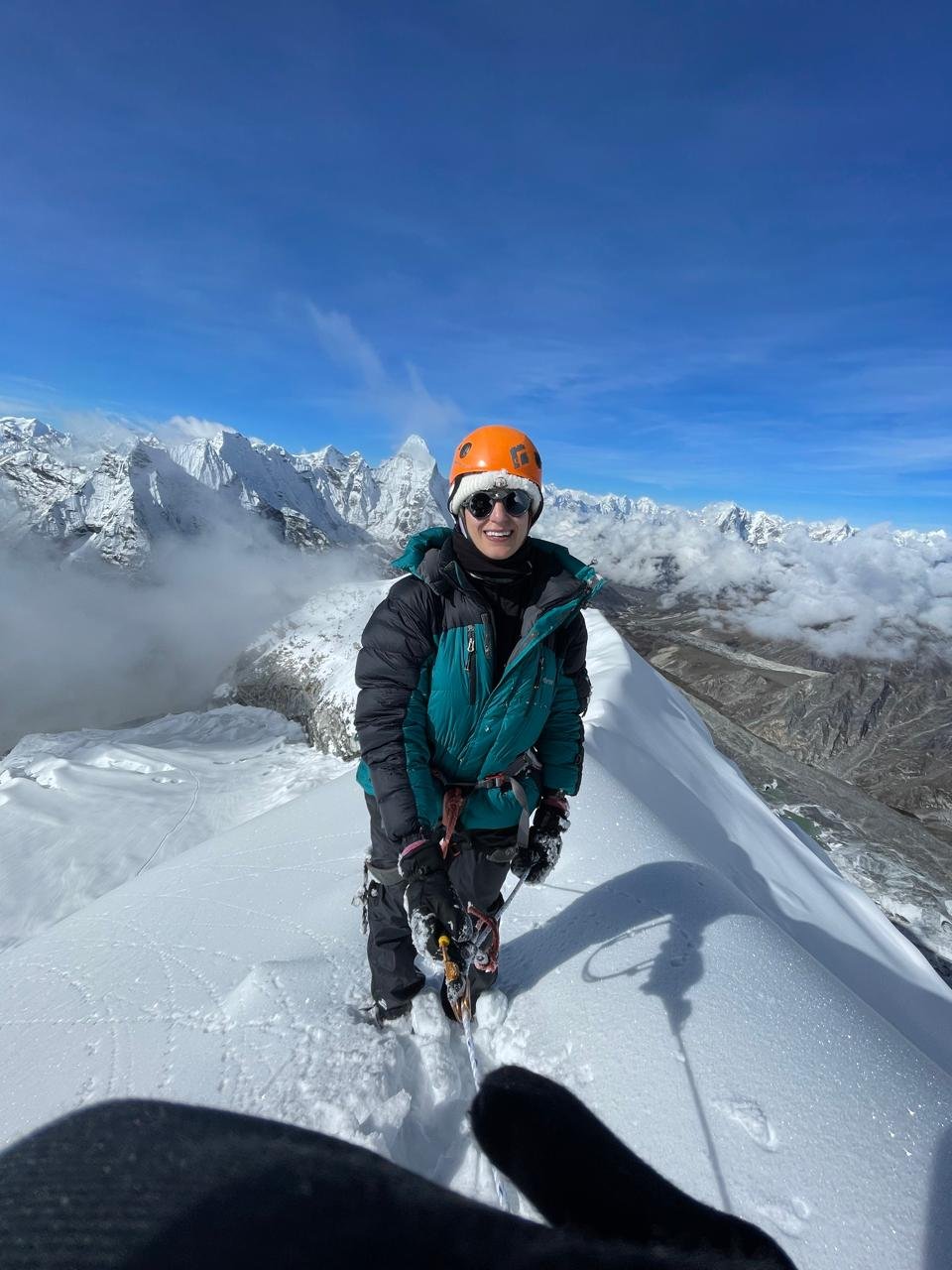
Reaching the summit of Island Peak (6,189m) is a truly unforgettable achievement. From the top, you can enjoy breathtaking, panoramic views of Lhotse, Nuptse, Makalu, Ama Dablam, Baruntse, and the surrounding Himalayan giants. Take some time for photos and to celebrate your accomplishment at one of Nepal’s most iconic trekking peaks.
After enjoying the summit, you will carefully descend back to Island Peak Base Camp, followed by a well-deserved rest and lunch. Later, you continue trekking down to Chhukung, where you will spend the night.
Overnight stay at a teahouse in Chhukung.
After completing your successful Island Peak summit, you begin your descent toward lower altitudes. The trail leads back through Chhukung and follows the beautiful Imja Valley, offering relaxing views of Ama Dablam, one of the most stunning mountains in the Everest region. The walk today is much easier compared to previous high-altitude days, allowing your body to recover as you gradually return to the Sherpa settlements.
By afternoon, you reach Pangboche (3,985m), a picturesque village known for its ancient Buddhist monastery and strong Sherpa culture. Pangboche is believed to be one of the oldest Sherpa villages in the Khumbu region and is often visited by climbers seeking blessings before high-altitude expeditions.
After checking into your teahouse, you can rest, enjoy a warm meal, or explore the village and observe traditional Sherpa lifestyle and Himalayan farming practices.
Overnight stay at a teahouse in Pangboche.
After breakfast in Pangboche, you begin your trek back toward the lively Sherpa town of Namche Bazaar. The trail descends through Debuche and continues toward Tengboche, passing through beautiful forests filled with rhododendron, pine, and juniper. If you did not visit earlier, you may take some time to explore the renowned Tengboche Monastery, one of the most important spiritual centers in the region.
From Tengboche, you follow a downhill path to Phunki Tenga, cross the suspension bridge over the Dudh Koshi River, and then climb steadily toward Namche. Along the way, you will once again enjoy wonderful views of Ama Dablam, Everest, Lhotse, and the surrounding Himalayan peaks.
Arriving at Namche Bazaar (3,440m) feels rewarding, as you return to a place with cozy bakeries, cafés, shops, and internet access—perfect for relaxing after days in remote mountain areas. Spend the evening strolling around the town or simply resting at your teahouse.
Overnight stay at a teahouse in Namche Bazaar.
Today is the final trekking day of your Island Peak expedition. After breakfast, you begin your descent from Namche Bazaar, following the familiar trail along the Dudh Koshi River. You will cross several suspension bridges, including the famous Hillary Suspension Bridge, and pass through local Sherpa villages such as Jorsalle, Monjo, and Phakding.
The walk is mostly downhill, which makes it easier, but the long distance still requires steady pacing. On the way, you can enjoy your last views of the Himalayan peaks, prayer wheels, chortens, and colorful mani walls that have accompanied you throughout this journey.
By afternoon or early evening, you reach Lukla (2,800m), where your trekking adventure officially comes to an end. After checking into your lodge, you can celebrate with your team, reflect on your successful Island Peak summit, and enjoy a relaxing evening before flying back to Kathmandu.
Overnight stay at a lodge in Lukla.
After an early breakfast, you head to Lukla Airport (Tenzing–Hillary Airport) for your scenic mountain flight back to Kathmandu. The short flight offers one last chance to admire the breathtaking Himalayan peaks and deep valleys you explored during your Island Peak Climbing adventure.
Upon landing in Kathmandu (1,350m), you will be transferred to your hotel. The rest of the day is free to relax, enjoy a warm shower, or explore the city. You may visit local markets, shop for souvenirs, or enjoy a celebratory dinner at one of Kathmandu’s popular restaurants.
This marks the end of your memorable Himalayan mountaineering journey, filled with adventure, cultural experiences, and the pride of reaching the summit of Island Peak (6,189m).
Overnight stay in Kathmandu.
Today marks the end of your unforgettable Island Peak Climbing adventure. Depending on your flight schedule, our representative will transfer you to Tribhuvan International Airport for your final departure. As you head home, you carry with you incredible memories of the Everest region, Sherpa culture, and the proud achievement of summiting Island Peak (6,189m).
We hope your journey in Nepal has been inspiring, rewarding, and filled with experiences that will stay with you for a lifetime. Wishing you a safe flight and looking forward to welcoming you again for future Himalayan adventures.
Namaste and thank you for climbing with us!
Includes/Excludes
Cost Includes
- Airport pickups and drops in a private vehicle.
- Two-night hotel in Kathmandu with breakfast.
- Teahouse accommodation during the trek.
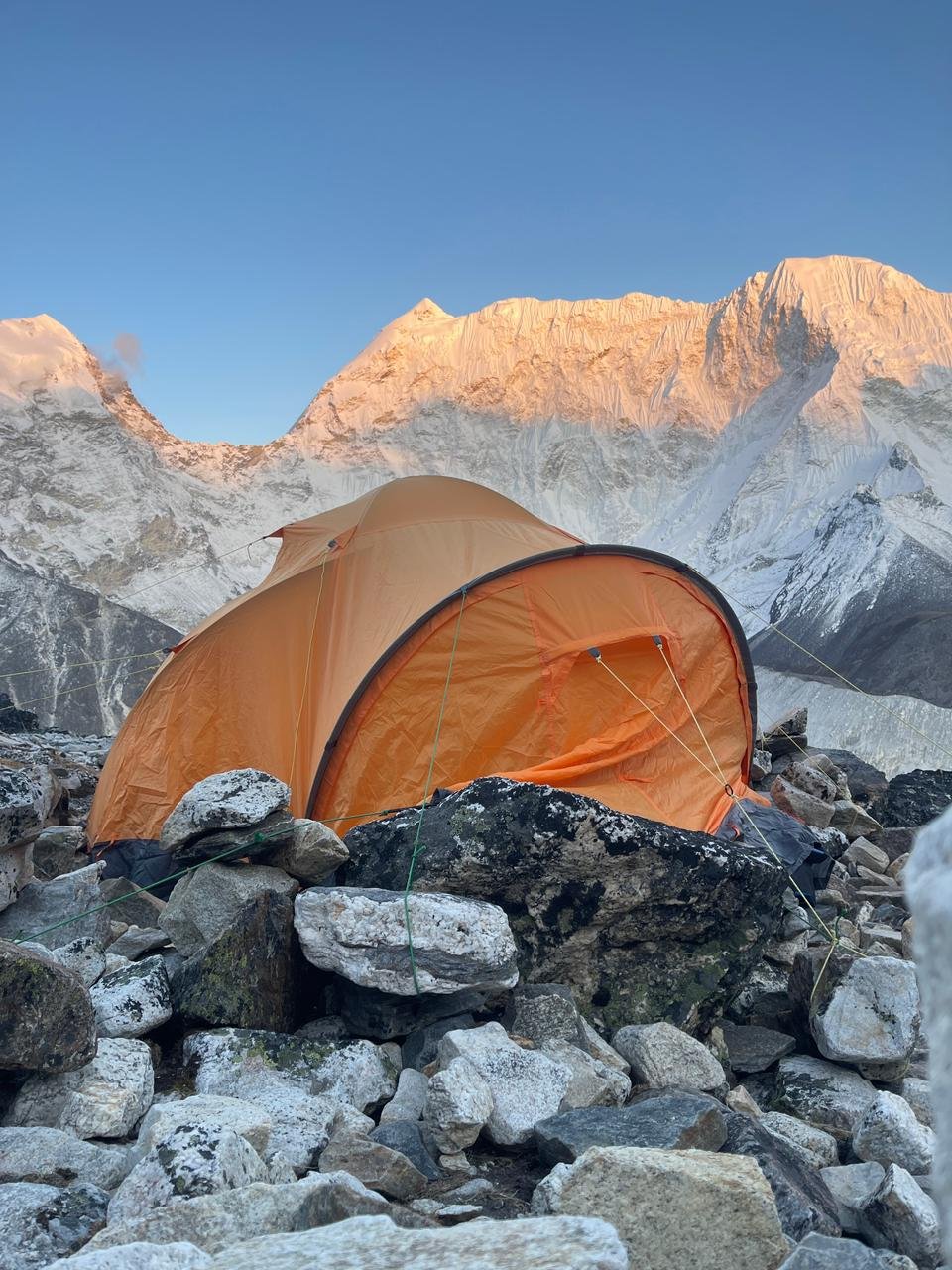
- Tented accommodation during the climb.
- All meals (breakfast, lunch, and dinner) during the trek and climb.
- Domestic flights (Kathmandu- Lukla -Kathmandu).
- English-speaking mountain guide including his salary, meals, accommodation & insurance.
- Professional climbing guide including his salary, meals, accommodation & insurance.
- Personal porter including his salary, meals, accommodation & insurance.
- Down jacket and sleeping bag (to be returned after trip completion).
- All necessary paperwork; trekking permits. Khumbu entrance fee and Island Peak climbing permit.
- Good quality tents and kitchen utensils for camping.
- Tea or coffee during the trek.
- Tea house accommodation throughout the trek.
- Group mountaineering (climbing) equipment.
- Farewell Dinner.
Cost Excludes
- Nepalese visa fee.
- Excess baggage charges (if you have more than 15 kg of luggage, the cargo charge is around $1.5 per kg)
- Extra night accommodation in Kathmandu because of early arrival, late departure, or early return from the mountain (due to any reason) than the scheduled itinerary.
- Altitude chamber (PAC) or oxygen.
- Lunch and evening meals in Kathmandu (and also in the case of early return from the mountain than the scheduled itinerary).
- Travel and rescue insurance.
- Personal expenses (phone calls, internet, laundry, bar bills, battery recharge, extra porters, bottle or boiled water, shower, etc.).
- Personal climbing equipment.
- Optional trips and sightseeing if extended.
- Tips for guides and porters.
FAQs
Island Peak is considered a moderately difficult trekking peak in Nepal, suitable for trekkers with good fitness and basic mountaineering skills. The climb involves glacier travel, fixed ropes, and the use of crampons and ice axe, making prior high-altitude trekking experience very helpful. Hiring a licensed mountain guide is strongly recommended for a safe and successful summit experience.
The best seasons for Island Peak climbing are spring (March to May) and autumn (September to November). These months offer stable weather, clear mountain views, and safer climbing conditions. Winter climbs are possible but extremely cold, while the monsoon season brings heavy rainfall and less visibility in the mountains.
Previous mountaineering experience is not always mandatory, but it is a great advantage. Trekkers should be comfortable with long hiking days at high altitude and prepared to learn basic climbing techniques during pre-climb training at Island Peak Base Camp. The guiding team will teach you how to use crampons, ropes, harness, and ice axe before the summit push.